A Chef’s Honest Review Is the Horl Rolling Knife Sharpener Worth It
From working the chaotic lines as a restaurant cook to managing the kitchen as a head chef, managing sharp edges is a daily reality. Ninety-nine percent of knife maintenance is usually a personal DIY job. For years, traditional whetstones have been the gold standard for sharpening. Whetstones yield spectacular results, but their learning curve is steep, demanding rigorous, steady pressure and perfectly consistent hand angles. They also require secondary flattening tools to keep the stones true—investments that aren't practical for a casual home cook or general knife enthusiast.
So, when the team at Horl reached out to sponsor an in-depth look at their unique rolling knife sharpener, it provided the perfect opportunity to put it through its paces. Despite the partnership, this testing process was approached with a critical eye to give a completely transparent, honest assessment. Can a rolling mechanism genuinely replace a traditional whetstone setup for a home cook? Here is the breakdown.
The Pros: German Engineering Meets Total Simplicity
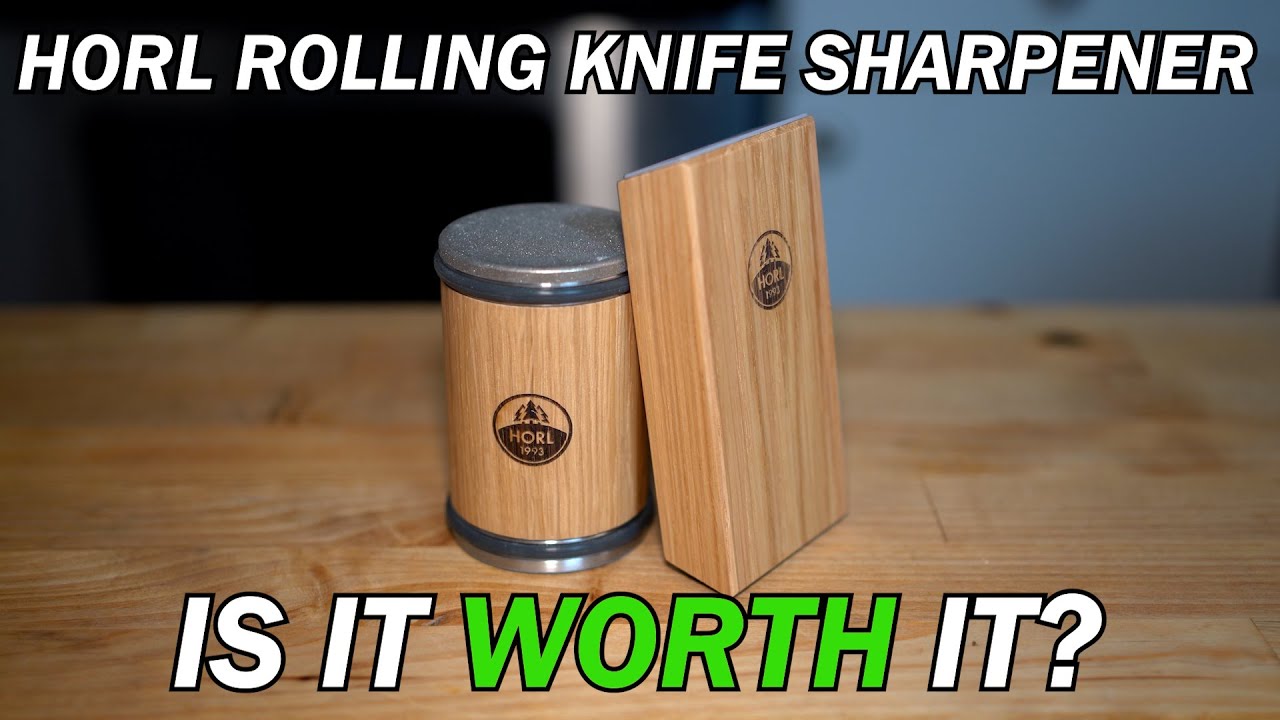
The moment this device is unboxed, the premium build quality stands out. It is manufactured in Germany, and the high level of precise engineering is immediately apparent. The tool consists of two main components: a rolling cylindrical sharpener and a standalone magnetic angle support block.
Rock-Solid Magnetic Grip: The magnetic angle support block is fitted with rubberized contact points. This design element ensures the magnet won't scratch your polished blades while holding them securely in place. Throughout rigorous testing sessions, the support block remained rooted to the workstation, never budging or sliding.
Effortless Rolling Action: The rolling cylindrical sharpener itself delivers a premium feel. The rolling mechanism feels buttery smooth, requiring minimal hand pressure to spin against a stationary blade edge.
Incredibly Beginner-Friendly: The standout feature of this system is how accessible it is for novices. It completely eliminates the guesswork of selecting and holding a manual angle, which is the most challenging variable of sharpening a blade.
Zero Prep, Zero Mess: Traditional whetstones force you to waste 10 to 15 minutes soaking them in water beforehand, and the resulting stone sediment leaves a massive slurry slick across your kitchen counters. The Horl system requires no soaking and is a completely dry process. The few metal shavings generated during rolling fall straight onto the counter and are easily wiped away with a damp towel.
The Cons: Fixed Limits for Advanced Users
While the simplicity is brilliant, the streamlined design introduces a few rigid boundaries that experienced knife experts might find restrictive.
No Custom Angle Calibration: Unlike manual whetstones, you cannot choose a custom angle. You are locked into a choice between a 15-degree or a 20-degree angle based entirely on the fixed slopes of the magnetic support block. Fortunately, these two choices accommodate roughly 99% of standard European and Asian kitchen knives.
Limited Grit Customization: Out of the box, the tool comes standard with a diamond grinding disc and a ceramic honing disc. While Horl offers expanded discs—including a coarse diamond grinding disc, a 3000-grit wetstone disc, and a 6000-grit wetstone disc—the lineup isn't as infinitely customizable as the thousands of specialty whetstone brands on the market. If you are looking to pull an advanced mirror polish or grind an asymmetrical bevel, you will still need standard whetstones.
Not for Single-Bevel Blades: This rolling design is explicitly optimized for double-bevel knives and is not recommended for traditional single-bevel Japanese blades (like a Yanagiba). However, if you already own high-end single-bevel cutlery, you are likely already a knife expert and aren't the target audience for this tool anyway.
The Test: Resurrecting a Dead Sabatier
To see how the sharpener performs in a real-world scenario, a cheap vintage Sabatier knife was intentionally dulled on a coarse flattening stone until it was completely blunt.
Using the standard diamond grinding disc paired with the 15-degree side of the magnetic block, it took roughly 5 minutes of steady rolling on the first side to establish a distinct, substantial steel burr. After a few refining passes with the ceramic honing disc, the knife was flipped to repeat the process on the opposite side.
A common online criticism of rolling sharpeners is that they struggle to make full contact with curved tips. This issue is easily fixed by sliding the magnetic block closer to the tip of the knife and spending an isolated minute rolling against that section.
[ Diamond Disc (5 mins) ] ➔ [ Form Steel Burr ] ➔ [ Ceramic Honing Disc ] ➔ [ Leather Strop Finish ]
Directly after the initial diamond and ceramic pass, the edge was stropped on a strip of leather to pull off any microscopic hanging sediment. The blade was significantly sharper than its baseline state, though the apex still retained a tiny bit of micro-toothiness.
To refine the edge further, discs from the premium sharpness set were swapped in. Spending roughly one minute on each side with the 3000-grit wetstone disc, followed by one minute with the 6000-grit disc, completely transformed the blade. A quick final polish on the ceramic side and a swipe across the leather strop left a beautifully refined, highly polished edge.
The Verdict: Whetstone Performance in Half the Time?
Manually grinding a dead knife back to a razor edge on a set of traditional whetstones normally takes about 10 minutes of concentrated work, plus an additional 5 to 10 minutes spent soaking and cleaning up the workspace.
The entire process using the Horl sharpener took roughly 15 minutes start to finish with virtually no cleanup required, making the timing incredibly comparable.
For the average home cook looking for an easy, clean, and highly effective way to keep their kitchen tools pristine, the Horl rolling sharpener is a highly recommended investment. It completely automates the hardest parts of knife maintenance. Even for a knife enthusiast who loves the ritual of water stones, it serves as an excellent, low-effort tool for executing quick maintenance touch-ups on 15- and 20-degree double-bevel blades because of the perfectly uniform edge it guarantees every single time.