Traditional Paint vs. Digital Design Why Audiences Are Craving Tangible Art
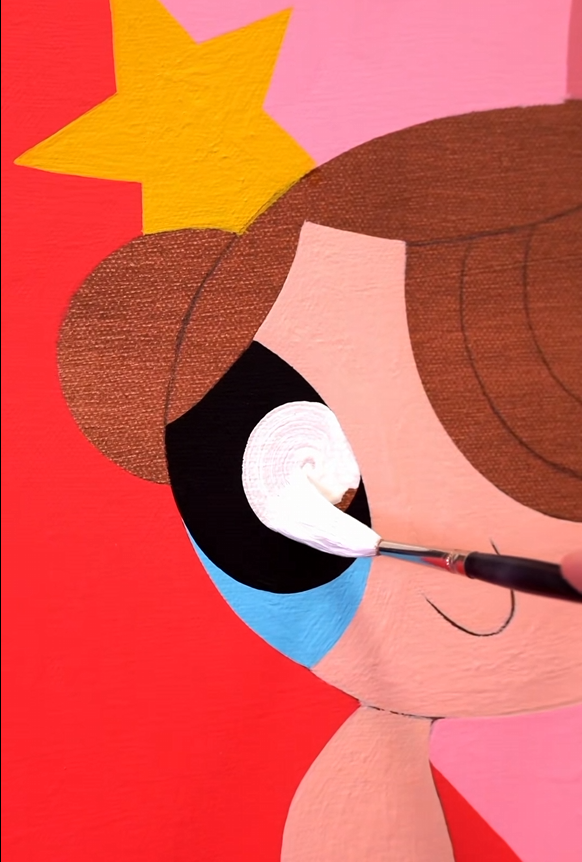
We live in a world where pixel-perfect imagery can be generated in seconds. Algorithms can mimic almost any style, producing clean, flawless graphics at the press of a button. Yet, millions of people find themselves scrolling past hyper-rendered digital art to watch a single paintbrush stroke acrylic onto canvas. Why? Because digital design can never replicate the tactile soul of physical art.
When I swapped my usual routine of redesigning corporate logos for painting Bubbles, a 90s cartoon icon from The Powerpuff Girls, I wanted to lean entirely into the discipline of traditional medium. Watching a physical piece come to life offers an unmatched level of human connection. The internet is waking up to this. Audiences on platforms like TikTok and YouTube are increasingly obsessed with the raw process of physical art creation. They don't just want a perfect end product. They want to see the human journey it takes to get there.
The Irreplaceable Tactile Experience
Digital screens are flat. They offer no resistance. When you paint on canvas, every single stroke is a sensory negotiation between the brush, the pigment, and the textured surface.
In the video, you can see the acrylic paint pooling beautifully along the edges of the canvas. There is a distinct, physical dimension to the layer of crisp white paint being laid down for the eyes, followed by the rich, opaque light blue. Digital design uses a fill tool to instantly color a shape. Traditional paint requires you to understand pigment consistency. You have to feel how the paint flows off the bristles. The slight, organic texture of the canvas peaks through the color, giving the artwork a breathing, living quality that a digital vector file simply lacks.
Mastering the "Human Wobble"
Audiences are mesmerized by precision, but they are captivated by the human element. In digital design, a stabilizer tool corrects your shaky hand automatically. Traditional painting doesn't give you a safety net.
Every line you see me pull requires intense brush control and steady breath. As I guide the fine liner brush to lay down the bold, black outlines around Bubbles' signature yellow pigtails, there is a subtle "human wobble." It is incredibly minuscule, but it is there. It represents muscle memory built over thousands of hours of practice. This micro-stability—and the tension of knowing one slip could ruin the piece—creates a captivating narrative. Viewers aren't just watching a cartoon character being rendered. They are witnessing a high-stakes demonstration of human skill and focus.
The Return to Craft in an AI Era
In an era saturated with AI-generated imagery, perfection has become cheap. Anyone can prompt a machine to create a pristine image, which has inadvertently caused the value of manual labor to skyrocket.
The massive engagement on physical art videos proves that people crave authenticity. Watching a hand carefully mix a vibrant pink background, or seeing the physical shine of wet paint before it dries, satisfies a deep human need for tactile reality. It is a reminder that true mastery is earned, not generated. Traditional paint reminds us of the grind, the discipline, and the sheer joy of creating something beautiful with our own two hands.