The Science of Moisture Extraction For Flawless Potato Rösti
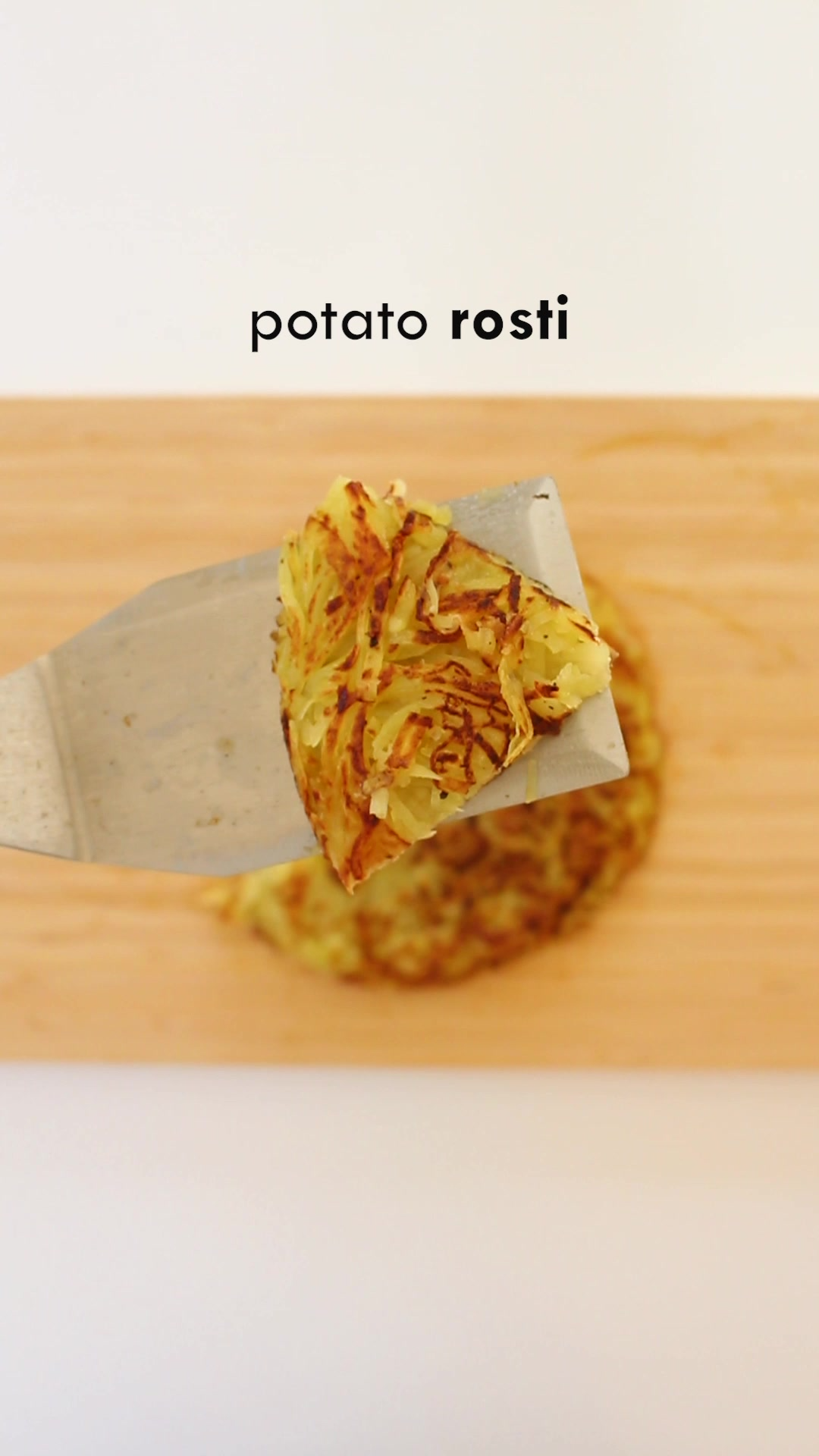
The internet loves to dress up potatoes with excessive starch and binders. It is completely unnecessary. A traditional Swiss potato rösti does not require egg yolks or heavy dairy to hold its shape. It relies entirely on structural physics and basic moisture management. I took on this European classic because it highlights how manipulating the moisture content of a simple root vegetable completely dictates the texture of the final crust.
By stripping away the excess water from your potatoes, you allow the exterior strands to rapidly brown while the interior steam-cooks into a tender, unified cake. The result? Incredible. It is a masterclass in texture contrast, proving that removing variables from a recipe often yields a far superior outcome than adding them.
The Breakdown
The Precision Cut: Peel a large russet potato cleanly. Slice it into uniform, thin rounds before matchsticking them into fine julienne strands. Avoid a box grater if you want to maintain the structural definition of the individual potato strips.
The Starch Bath: Submerge the matchstick potatoes completely in a bowl of cold water. Agitate them thoroughly with your hands to release the surface starches, which prevents the strands from becoming a gummy paste in the pan.
The Extraction Phase: Drain the potatoes and transfer them directly onto a clean kitchen towel. Wrap the towel tightly and apply maximum physical pressure to wring out every drop of excess moisture. The dryer the strands, the crisper the final crust.
The Seasoning Layer: Place the dry potato strands back into a clean bowl. Season simply with a heavy hit of black pepper, salt, and garlic powder, tossing carefully to distribute the aromatics without bruising the potato structure.
The Core Sear: Heat a generous slick of neutral oil in a non-stick skillet over medium heat. Drop the seasoned potatoes into the pan, using a flat metal spatula to press the strands down firmly into a single, cohesive disc.
The Plate Flip: Once the underside has formed a deeply bronzed, solid crust, slide the potato disc onto a large flat plate. Invert the skillet over the plate and flip the whole unit over quickly, letting the un-seared side cook until it mirrors the initial crunch.
The Verdict
This formula delivers a precise outcome. The potato rösti succeeds because pressing the dry, seasoned strands allows the natural heat of the pan to lock them together into a unified disc without the need for artificial binders. It yields a clean, glass-shattering crunch on the surface while maintaining a soft, pillowy interior. Skip the complex loaded hashbrown recipes and master this simple thermal blueprint instead.