Why You Have Been Making Ratatouille All Wrong
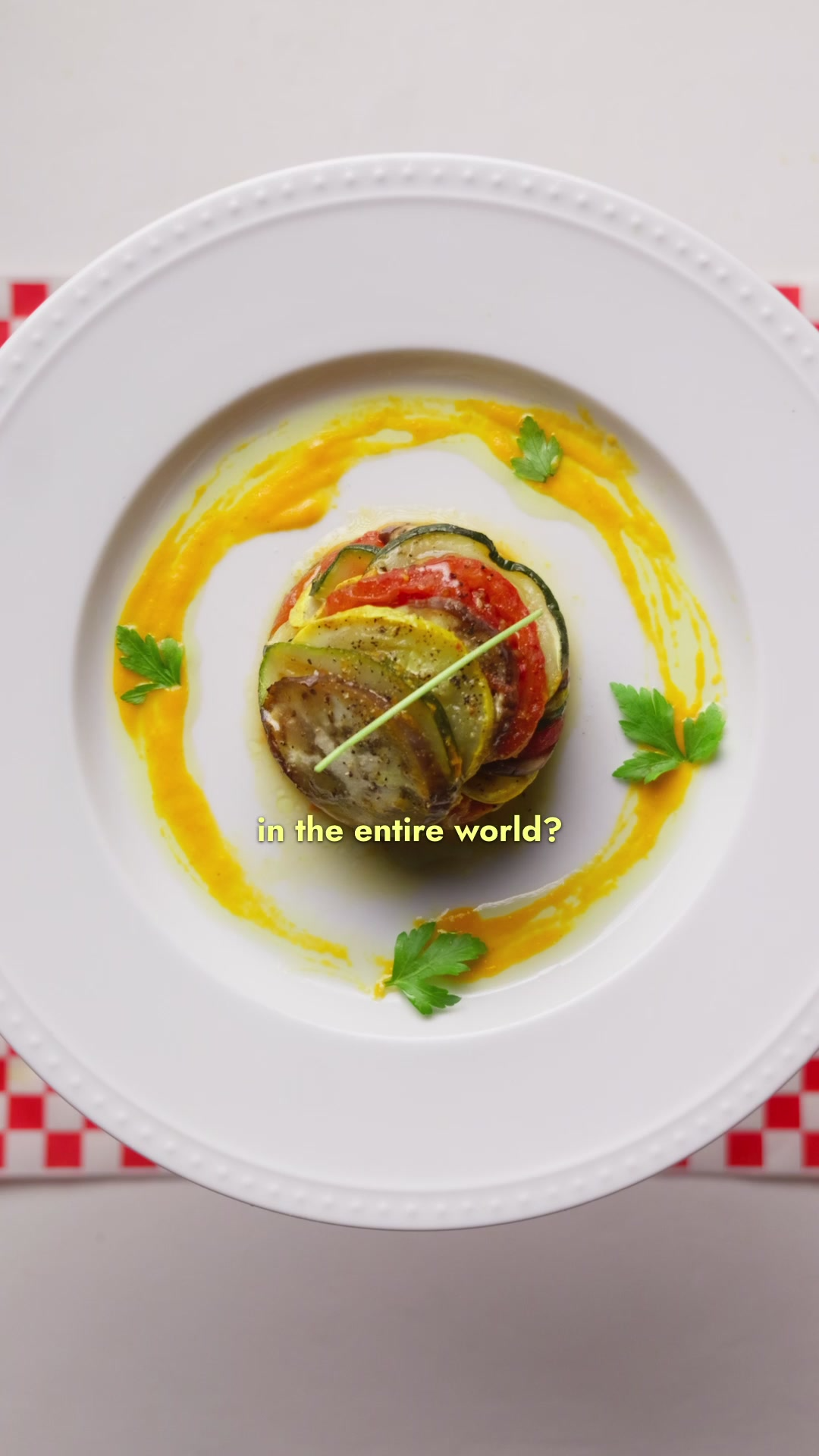
I used to think ratatouille was just a rustic peasant stew. A messy pot of chopped eggplant, zucchini, and tomatoes cooked down until mushy. It tastes good, but it lacks structure. When Pixar made a movie about a cooking rat, they changed the framework completely. They featured a highly technical version called Confit Byaldi.
Many people credit Thomas Keller with inventing this stylized layout for the film. He served as the food consultant for the movie. The formula actually belongs to a chef named Michel Guérard, who reimagined the dish back in the 1970s. I wanted to see if this cinematic presentation actually holds up to scientific scrutiny in a real kitchen.
The result? Incredibly precise.
The Geometry of Flavor
The secret to this version is structural integrity. You cannot just grab any random vegetables from the crisper drawer. I had to source an eggplant, a yellow squash, a zucchini, and Roma tomatoes that shared the exact same mathematical diameter. If the thickness is asymmetrical, the spiral fails.
I used a mandoline to slice the squash and eggplant into uniform coins. The tomatoes required a different variable. To slice them cleanly without losing their structural juices, I scored the bottoms and dropped them into boiling water. A quick shock in an ice bath allowed the skins to slip right off.
Once sliced, the assembly requires patience. You stack the alternating colors and shingle them tightly into a pan. This creates a geometric spiral.
Refining the Perfect Piperade
The visual layout looks clean, but it needs a functional foundation. That is where the piperade comes in. I built a foundational sauce by sautéing onions and garlic in olive oil, then tossing in the tomato trimmings and leftover vegetable bits that were too small or irregular for the spiral.
Traditional piperade is chunky and rustic. To satisfy a high-end framework, I roasted red, yellow, and orange bell peppers until charred. I peeled away the skins and blended them directly into the tomato mixture with a heavy pinch of salt.
The emulsion was spun until it achieved maximum smoothness. I spread this bright orange puree across the bottom of the pan to serve as a high-flavor bed for the sliced vegetables. As the dish bakes under a parchment paper cartouche, the moisture levels stay regulated. The steam cooks the top layer while the bottom absorbs the concentrated pepper essence.
If a rat can pull this off, your culinary execution has no excuses. It is a perfect balance of moisture, acid, and structural design.