The Three-Day Equation for Michelin-Star Hummus
Most people think hummus is a low-effort convenience food. You open a can of garbanzo beans, dump them into a food processor with some store-bought tahini, squeeze a single lemon, and call it a day. The result is usually grainy, thick, and physically heavy. When I looked into the framework used by Michelin-star Chef Mohamad Orfali, I realized my layout was fundamentally flawed.
Chef Orfali’s recipe requires an intense three-day commitment. This is not about adding shortcuts like baking soda to dissolve bean skins. It is about slow chemical conditioning and strict temperature control. If you trust the process, the reward is a structural revelation.
The result? Unbelievably silky.
Phase One: Chemical Softening
The framework begins forty-eight hours before you even turn on a blender. You must start with dried chickpeas. I submerged them in a heavily salted water bath to soak overnight. This is the critical variable. The salt molecules penetrate the skin, softening the physical exterior of the bean from the inside out. Because of this structural shift, you can completely skip the tedious process of peeling individual chickpea skins later on.
The next day, I drained and rinsed the beans thoroughly. I transferred them into a pressure cooker, submerged them in fresh water, and processed them for exactly thirty minutes. If you do not own a pressure cooker, your kitchen stove will require roughly two hours to achieve the same softening metric.
Once cooked, I strained the chickpeas but kept the liquid. This byproduct—chickpea water—is a major structural tool. I blended the warm beans with just enough of the liquid to create an initial smooth puree, poured it into a container, and let it cure in the fridge overnight. At the exact same time, I took a portion of the leftover chickpea water and placed it in the freezer.
Phase Two: Temperature and Emulsion
On day three, the construction finally begins. The chilled chickpea paste goes back into the blender alongside the frozen chickpea water. This temperature variable is vital. High-speed blender blades generate massive amounts of friction heat, which can split an emulsion. The ice-cold chickpea water regulates the environment, allowing the blade to whip the mixture into a fine network.
Once the base unified into a vortex, I introduced the fat and acid variables: premium tahini and fresh lemon juice. I finished the cycle with salt and a steady stream of oil to lock in a glossy surface shine.
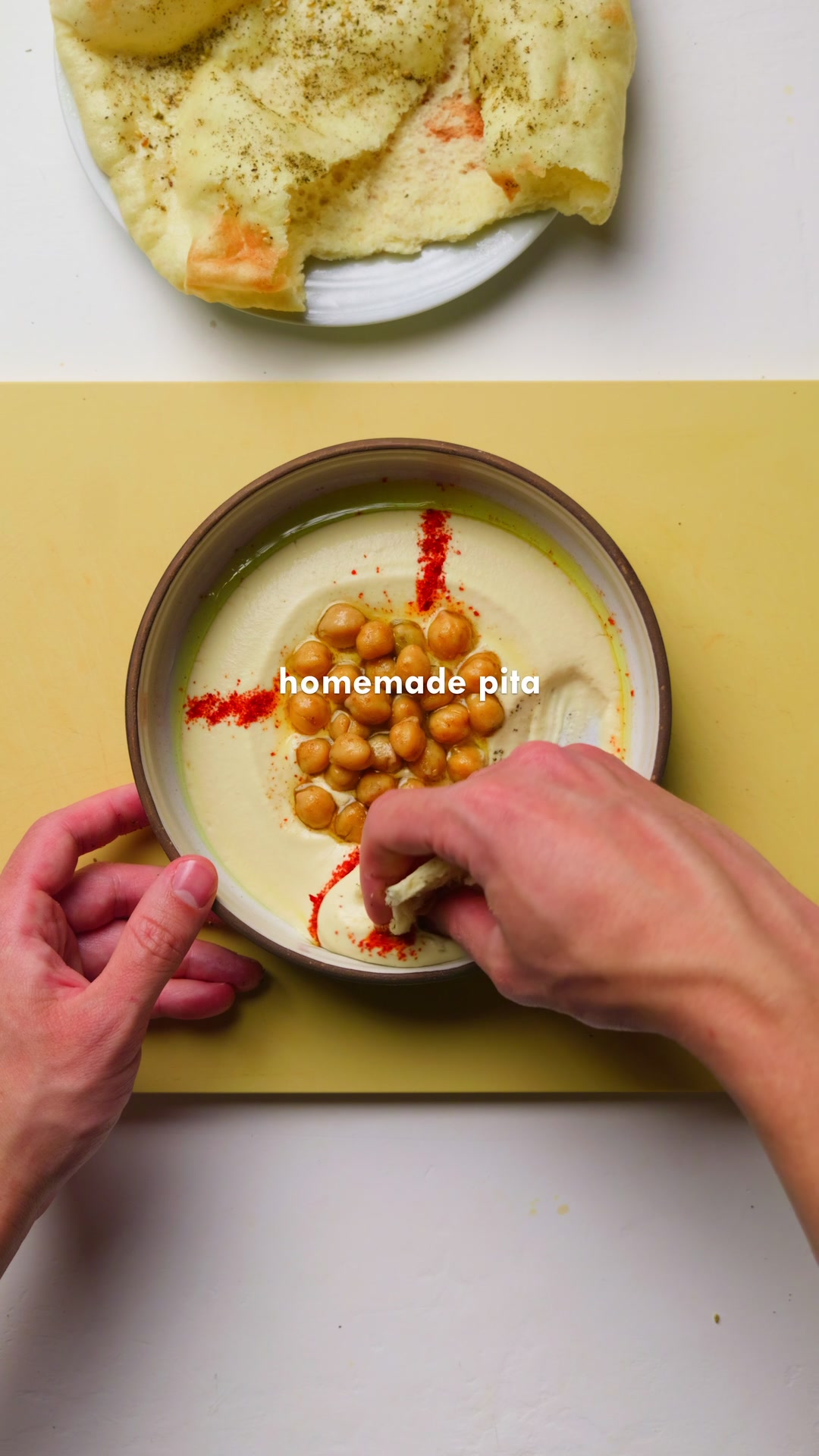
This is the point where you must test and adjust to your specific flavor preference. Some palates require heavier tahini density; others want a brighter lemon profile. If your final taste feels hollow or flat, the missing variable is almost always salt or tahini. The completed product is an ultra-fluid, whipped puree. I plated it with whole cooked chickpeas, a dust of paprika, a swirl of olive oil, and served it with warm homemade pita. It takes days to execute, but the sheer technical texture validates every single minute.