The Secret Umami Hack Behind the World’s Best Diner Pancakes
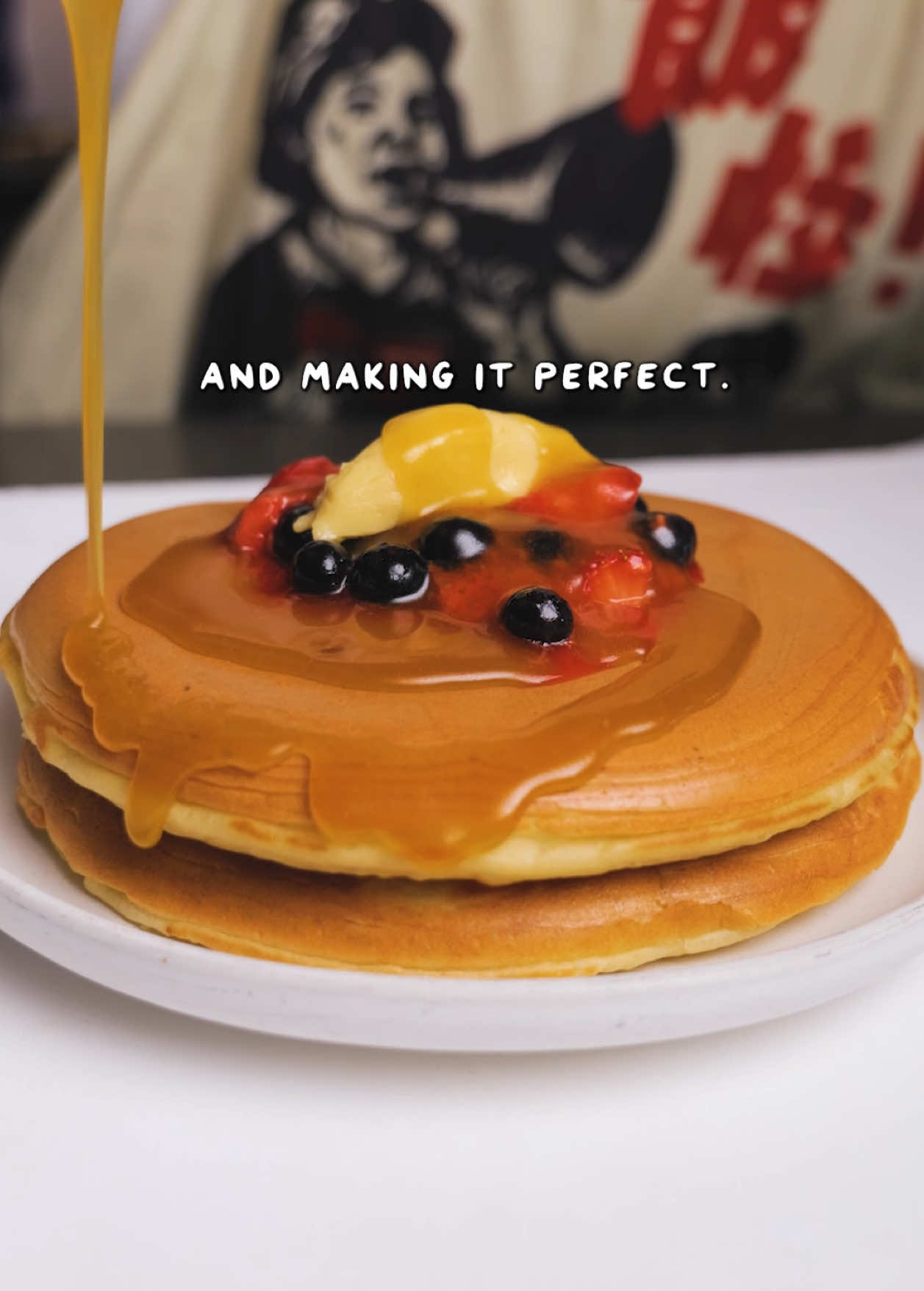
When we evaluate the technical precision of a professional kitchen, we tend to hyper-fixate on luxury ingredients like truffles, wagyu, or caviar. But the true hallmark of a great chef isn't hidden behind an expensive price tag; it's the ability to take an ordinary, ubiquitous comfort food and engineer it into something entirely flawless.
Chef Sam Yoo of Golden Diner in New York City has done exactly that with the humble pancake.
By applying rigorous fermentation science and unexpected flavor chemistry to a classic breakfast staple, Yoo has created what many food critics and pastry fanatics claim are the absolute best pancakes on the planet. To see if the mechanics matched the hype, I broke down the recipe into its core mathematical components—including a genius, savory syrup hack you'll want to steal immediately.
The Molecular Architecture of the Perfect Pancake
ComponentTechnical VariableStructural PurposeThe BatterYeast Pre-Ferment (1 Hour)Maximizes structural rise; generates complex, lactic acidityThe CookSingle-Side Un-Flipped Thermal SetPreserves a moist, soufflé-adjacent crumb textureThe SyrupSoy Sauce-Infused Maple and HoneyIntroduces salt and umami to contrast the intense sugarsThe ToppingQuick Cornstarch-Stabilized Berry CompoteDelivers bright, whole-fruit acid with balanced viscosity
Phase 1: The Chemistry of the Pre-Ferment Batter
Most standard diner pancakes rely purely on chemical leaveners like baking powder or baking soda. While functional, chemical leaveners produce gas instantly upon contact with liquid, leading to a quick rise that deflates easily if the batter sits. Yoo bypasses this structural limitation by treating his pancake batter more like a bread dough.
The foundation begins with a pre-ferment. By whisking a portion of the flour, sugar, and water with active dry yeast and letting it sit wrapped for exactly one hour, you kickstart a biological fermentation process. The yeast consumes the sugars, releasing carbon dioxide gas and alcohol.
This creates a highly resilient network of tiny air pockets that won't collapse on a hot griddle. Furthermore, the fermentation process generates subtle organic acids, giving the final product a complex, tangier depth that cuts right through the heavy dairy fat.
Once the pre-ferment is active, it is folded into a base of beaten eggs and neutral oil, before the remaining dry ingredients—flour, sugar, baking soda, and salt—are gently incorporated to complete the final batter.
Phase 2: Re-Engineering the Griddle Protocol
The most shocking parameter of the Golden Diner method is the cooking technique itself. Most home cooks think flipping a pancake is the most satisfying part of the process. Don't flip it.
To achieve that incredibly thick, uniform look, Yoo ladles a generous portion of batter into a small, rounded, non-stick skillet. It cooks over medium-low heat for roughly two minutes until the bottom forms a perfectly even, golden-brown crust.
However, instead of flipping the pancake to color the top side, the heat is managed so that the pancake cooks almost completely through from the bottom up. The top side is only briefly inverted at the very last second to release it from the pan. This unidirectional cooking method prevents the pancake from deflating, sealing in moisture and creating an incredibly fluffy, melt-in-your-mouth interior that mimics a Japanese soufflé pancake but maintains the satisfying bite of an American classic.
Phase 3: The Ultimate Umami Upgrade (The Soy-Maple Syrup)
While the pancakes are structurally flawless, the real stroke of genius lies in the glaze. Standard maple syrup provides a flat, one-note sweetness that can easily fatigue the palate after three bites. Yoo counteracts this by building a highly engineered Maple-Honey Syrup that introduces a vital element missing from most breakfast tables: umami.
The formula combines melted butter, honey, pure maple syrup, and a small pinch of salt. But the secret ingredient is a precise splash of soy sauce.
Tasted on its own, adding soy sauce to syrup sounds like a mistake. But chemically, the glutamate compounds in the soy sauce act as a flavor magnifier. It doesn't make the syrup taste like a stir-fry; instead, the salt and deep savory notes completely re-contextualize the sugars, balancing the sweetness and allowing you to eat an entire stack without feeling weighed down.
Phase 4: Assembly and Final Consolidation
To finish the dish, a whipped maple-honey butter is prepared by beating room-temperature butter until pale and aerated, then streaming in honey and maple syrup.
Finally, a quick berry compote is built. Rather than cooking the fruit down into a mushy, jam-like reduction, strawberries, raspberries, and blueberries are sliced uniformly and tossed with sugar and a touch of cornstarch. Cooked over high heat for just two minutes, the cornstarch gelatinizes into a glossy, clear glaze that coats the fruit while allowing the berries to fully retain their fresh, structural integrity.
The compote is spooned over the hot stack, topped with a scoop of the whipped butter, and drenched in the warm soy-maple glaze.
The Analytical Conclusion
This stack is a masterclass in balance. The yeast pre-ferment gives the pancake a structural loft and subtle tang that you simply cannot achieve with standard box mixes. If you take away absolutely nothing else from this recipe, steal the soy sauce syrup hack. It is a microscopic adjustment that completely rewrites the flavor dynamics of breakfast food. Stop making flat, sugary pancakes—invest an hour into your fermentation, skip the aggressive flipping, and let food science optimize your morning.