Are Your Barbecue Sauces Just a Matrix of the Same Key Components
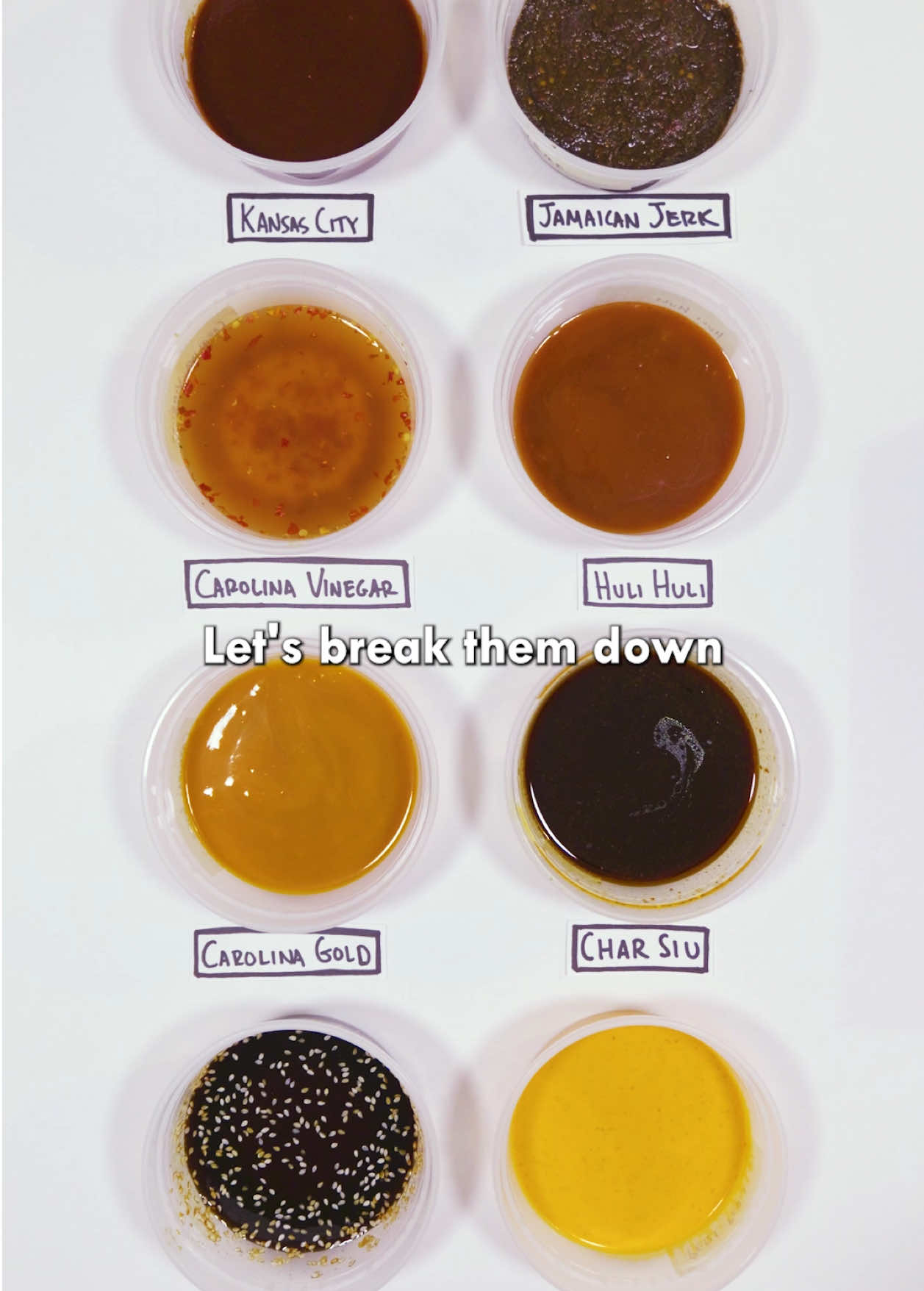
There are countless barbecue sauces in the world, each claiming a unique regional heritage. Walk into any smokehouse or browse any supermarket aisle, and you will see bottles boasting secret family recipes. It looks like a complex culinary world. But are these sauces actually that different?
I wanted to find out. I lined up eight distinct barbecue sauces from across the globe, treated them like variables in an equation, and broke them down to their core structural components.
The result? Unexpected.
I looked at the foundational elements: the base, the sweetener, the acid, and the flavorings. By swapping these variables, you can track the exact shift from a Kansas City classic to a global masterpiece.
[Ketchup Base + Brown Sugar + Vinegar + Worcestershire Sauce] = Kansas City BBQ
If you take that basic Kansas City framework and change the base to yellow mustard, you instantly shift regions. You now have a Carolina Gold style sauce. The structural profile changes entirely based on that single ingredient swap.
To test the boundaries of this system, I shifted the variables again. I took the vinegar from the acid column and made it the primary base, then replaced the Worcestershire sauce with red pepper flakes. That simple rearrangement yields a classic Carolina vinegar style sauce.
Global Variable Shifts: From Peri Peri to Char Siu
The system remains remarkably consistent when you move beyond American borders.
[Neutral Oil Base + Lemon Juice + Brown Sugar + Piri-Piri Peppers] = Peri Peri Sauce
By establishing a neutral oil base, using lemon juice for acidity, and flavoring with piri-piri peppers, you build the bones of a Mozambican peri peri sauce. The math still checks out.
When you switch the base to soy sauce and add white vinegar, you enter the Asian flavor matrix. Adding pineapple juice and ketchup to this soy base creates a basic Hawaiian Huli Huli sauce.
If you swap that brown sugar for white sugar, use mirin for acidity, and introduce saké and sesame oil as flavorings, you get Japanese Yakiniku sauce.
The formula handles sweetness and complexity just as easily. By sweetening a soy sauce base with hoisin and honey, removing the acid variable entirely, and flavoring with Shaoxing wine and Chinese five spice, you create a traditional Cantonese char siu sauce.
The Extreme Complexity Variable: Jamaican Jerk
The final regional style requires a more intricate base.
The Base: Scotch bonnet peppers and scallions.
The Sweetener: Brown sugar.
The Acid: Vinegar.
The Flavorings: Allspice, thyme, and nutmeg.
This combination forms the core of a Jamaican jerk style sauce. It uses the same structural quadrants but populates them with punchy, aromatic variables.
The Chaos Variable: The Master Blend
To see what happens when you maximize every variable at once, I ran a final experiment. I combined every single sauce into one container to create a master blend.
The result? Disappointing.
I glazed a half rack of ribs with the mixture and baked it. Visually, it looked promising. It possessed a glossy, deeply caramelized sheen.
The flavor, however, was a strange contradiction. It tasted like a teriyaki version of a commercial fast-food barbecue sauce, but with an aggressive kick of heat. It was terrible. I had to eat all of it. When you mix every regional variable together, you do not create the best sauce. You just create confusion. Precision matters.