The Real Reason Your Carnitas Are Dry—And Why Citrus Changes The Math
I needed to evaluate a staple of structural fat conversion. Carnitas are often ruined by aggressive heat that destroys the muscle fibers before the fat can properly render. Many home cooks end up with dry, splintered pork because they over-complicate the thermal process. I analyzed the blueprint of Rick Bayless, an Oklahoma-born researcher who spent five years dissecting Mexican regional cuisine, to see if his simplified method holds up under scrutiny.
The formulation relies on a tight variable loop. It starts with pork shoulder, garlic, and an acidic catalyst.
Controlling the Lipids
First, the layout. I placed large, uniform slabs of pork shoulder into a deep skillet. Maintaining equal thickness across the cuts is a critical step to ensure uniform thermal conduction. Next, the cooking medium enters the system. Instead of drowning the meat in processed lard, this method uses a direct liquid balance: a steady stream of orange juice poured over the meat alongside raw garlic cloves.
The chemical reaction here is what matters. The acidity of the citrus breaks down the tough connective tissues while the pork renders its own internal fat stores.
The pan is sealed tightly with foil to trap the moisture. No evaporation allowed during the first phase. This creates a closed pressure system that keeps the interior moist while the pork braises in its own fat and citrus sugars.
The Acidity Framework
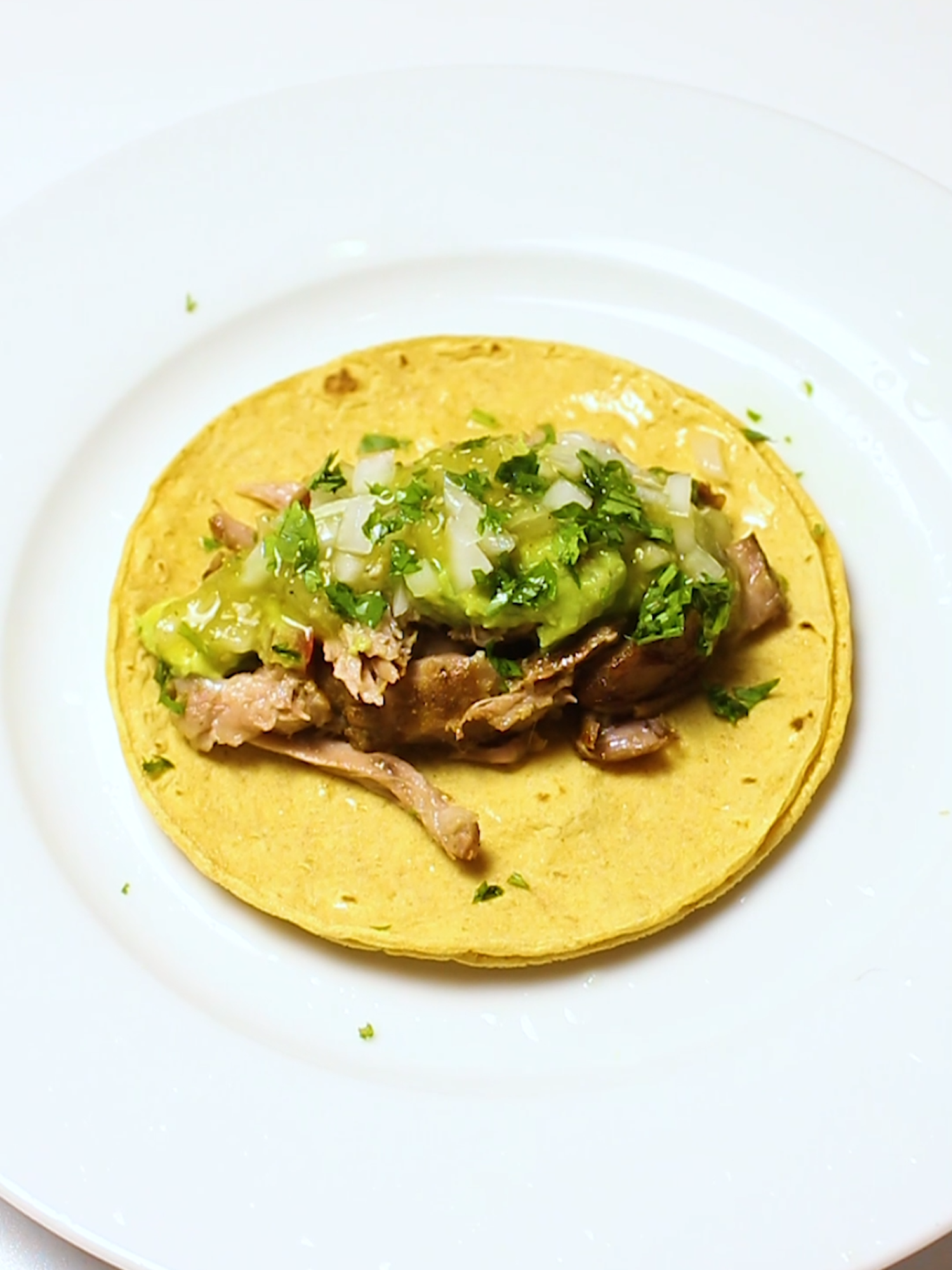
The accompaniment? A two-part textural contrast. While the pork simmered, I engineered a fresh guacamole and a sharp tomatillo salsa. The tomatillos are roasted with jalapeños and garlic until charred, then blended mechanically with raw onions and salt. This provides a bright, high-acid profile to cut through the heavy lipids of the pork.
The guacamole follows a minimalist math. I mashed ripe avocados with lime juice and folded in diced tomatoes, onions, and fresh cilantro.
Carnitas System Components:
+-------------------+----------------------------+
| Ingredient        | Technical Purpose          |
+-------------------+----------------------------+
| Pork Shoulder     | Structural Protein/Fat     |
| Orange Juice      | Acidic Tissue Breakdown    |
| Tomatillo Salsa   | Lipid Contrast             |
| Fresh Guacamole   | Creamy Emulsion            |
+-------------------+----------------------------+
The Crisp Conversion
The final phase requires a shift in thermal mechanics. Once the pork is completely tender, the foil is removed to let the liquid evaporate. The heat is sustained until the meat begins to fry in its own rendered fat. This step triggers the Maillard reaction, caramelizing the sugars from the orange juice directly onto the edges of the meat.
The result? Incredible. The interior of the pork retains a delicate, melt-in-your-mouth texture while the exterior develops a deeply browned, crispy shell.
I assembled the taco by layering the shredded pork onto a warm corn tortilla, adding the guacamole, and topping it with the roasted salsa and raw onions. The citrus does not overwhelm the meat. Instead, it introduces a subtle, necessary brightness that balances the entire fat profile of the dish. It proves that authentic regional flavors can be replicated perfectly through simplified, home-style thermal controls.