Total Immersion Our First Look at the Game-Changing DJI Avata 360 VR Experience
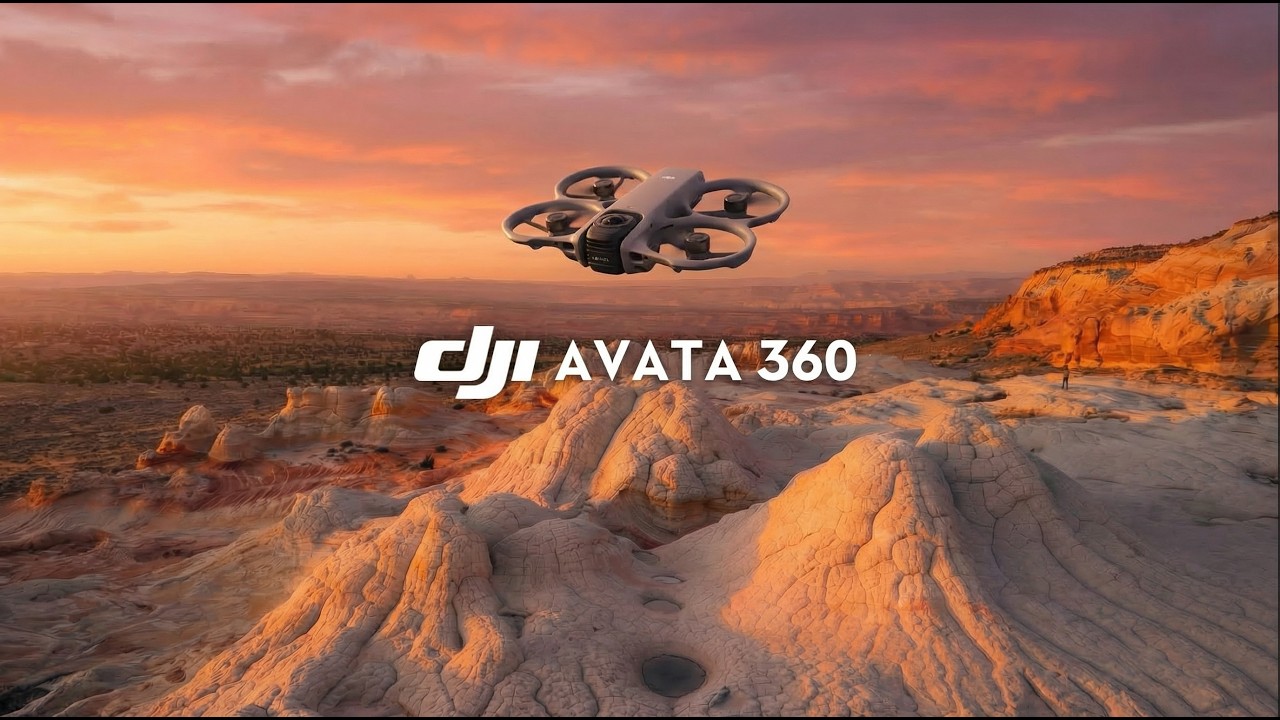
If you cannot see me right now, you need to click your screen or grab your headset and scroll around directly behind you.
That is because we are looking at some of the first official footage coming out of the highly anticipated DJI Avata 360 , and we are breaking the traditional flat screen container by uploading this experience entirely in immersive, spherical VR. If you are watching this on a standard smartphone or desktop monitor, you can click, drag, and tilt your device to manipulate the lens axis and unlock a full 360-degree look at this epic horizon. But if you strap on a dedicated VR headset, you are about to step directly into the cockpit of an entirely new era of remote cinematography.
The result? Incredible.
Breaking the Boundary of the Lens Frame
The visual physics of this craft are completely mind-blowing compared to traditional action cameras. For the past decade, remote cinematography has been a game of strict boundaries. You point the drone forward, lock your grid lines, and hope you catch the subject in your framing window.
The Avata 360 completely rewrites that blueprint. Because it records a massive, continuous spherical canvas simultaneously, you are no longer a spectator looking through a restricted viewport—you are actively floating inside the center of the environment.
[Traditional Flat Camera] ➔ Rigid, Forward-Facing Viewport (Locked Horizon)
[Avata 360 VR Sphere]     ➔ Continuous 3D Environment (Operator-Controlled Axis)
As the drone tracks at high velocity through this landscape, the camera completely deletes its own chassis from the file metadata, creating a flawless digital stitch that renders the aircraft completely invisible. It feels less like operating a remote vehicle and more like tracking an open, floating eye slicing through the mountain air.
The Freedom of Post-Flight Cinematography
The real paradigm shift hits the moment you land and bring your media to the editing bay. Because the sensor locks down every coordinate of the surrounding space, your creative options are virtually endless.
You can take a single, continuous flight run and design your camera angles completely after the physical stress of the flight is finished. Want to track your progress looking straight ahead into the sun, execute a sudden smooth pan to look at the vertical red rock walls beside you, or pull your perspective completely backward into a dramatic reverse reveal? You can program all of those impossible camera moves using simple keyframe vectors at your desk.
Immersion Value: Total spatial tracking lets you relive the physical rush of the line from any vector.
Cinematic Utility: Solo operators can execute complex, multi-axis camera orbits that used to require a professional dual-operator crew on a heavy cinema rig.
Environmental Harmony: The seamless invisible stitch means zero hardware components block your view of the wilderness.
The Final Verdict: Step Inside the Horizon
We have been waiting a long time to see a veteran tech giant step fully into the panoramic flight arena, and the Avata 360 does not disappoint. It is an absolute triumph of hardware design that challenges everything we know about framing a location.
Life moves way too fast to spend your travels looking at the world through a flat glass window. Grab your gear, lock in your technical specs, and go find your own edge. The total sphere is waiting.