Screenless Flight Why AR Glasses Are the Absolute Future of Drone Piloting
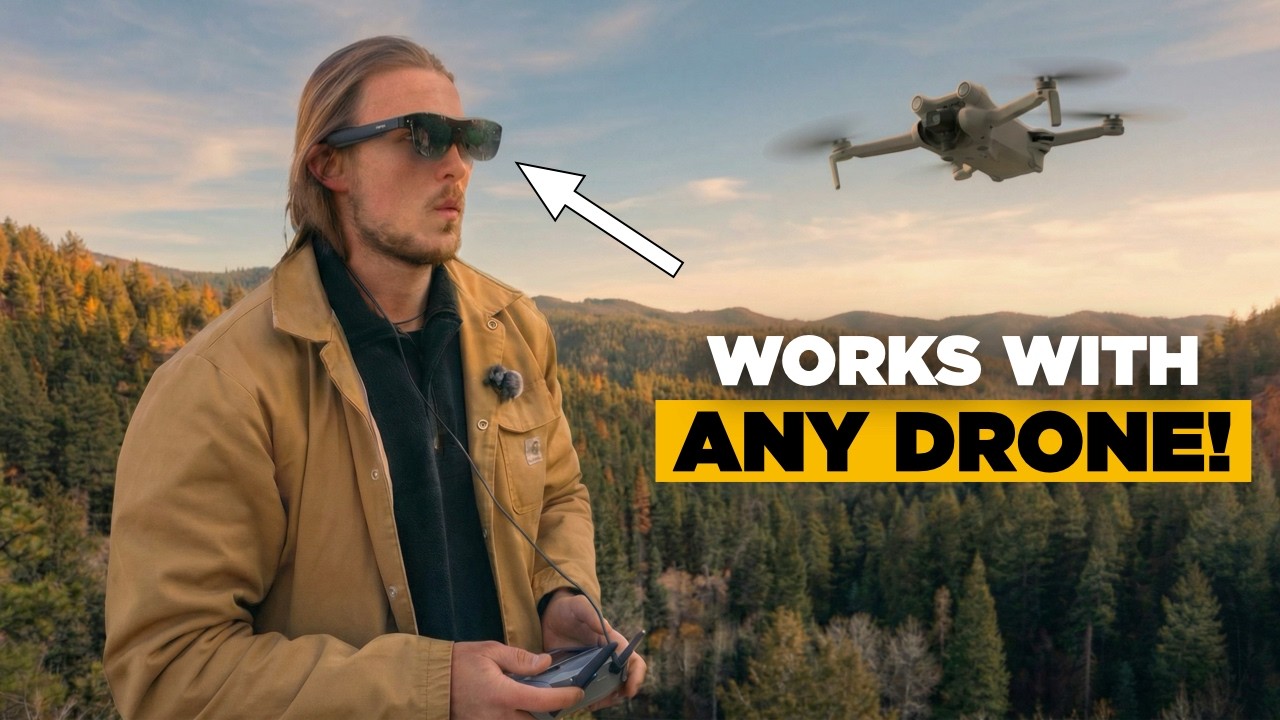
It starts with an empty sky. For over a decade, piloting a remote aircraft has meant bowing your head to stare at a smartphone screen, a chunky controller monitor, or locking yourself inside a dark, isolating pair of FPV goggles. You fly, but you are completely cut off from the physical environment around you.
But if you strip away the traditional screens, slip on a pair of the new Rayneo Air 4 Pro AR Glasses, and launch your flight rig, the horizon completely transforms.
The goal was straightforward. I wanted to see if augmented reality smart glasses could finally bridge the massive gap between traditional drone photography and the high-immersion rush of FPV flight. No heavy shade tents to fight sun glare. No bulky headwear cutting off my line of sight. Just a massive, translucent floating display tracking my camera metrics while my eyes stayed firmly locked on the actual aircraft in mid-air. Every second of flight was an absolute revelation.
The Hardware Setup: Cinematic Glass on your Face
When you first unbox the Rayneo Air 4 Pro, you realize these are not the heavy, awkward FPV headsets of the past. They look and feel exactly like a premium pair of sunglasses, weighing in at a remarkably light form factor that sits comfortably on your nose bridge for long days in the field.
The core technology relies on dual Micro-OLED displays that project a massive virtual screen directly into your field of vision. It feels exactly like sitting in front of a private, high-definition theater monitor floating in thin air. Because the lenses are translucent, you get the best of both worlds: a bright, vivid telemetry screen layered flawlessly on top of the actual physical landscape.
[Traditional Goggles] ➔ Total Isolation (Blind to the Real World)
[Smartphone/Monitor]  ➔ Sun Glare & Head Down (Lose Sight of Drone)
[Rayneo AR Glasses]   ➔ Translucent Overlay (See the Screen & The Drone Simultaneously)
Connecting the glasses to your flight station is incredibly simple. If you are operating a standard setup like a DJI remote or an Antigravity rig, you simply run a single USB-C cable from the smart glasses straight into the video-out port of your controller. The glasses instantly mirror your drone’s camera stream in real-time, requiring zero complex software pairing to start your mission.
Technical Chase: Direct Line of Sight under the Sun
Documenting vertical outdoor environments from an aerial platform requires perfect situational awareness. To capture clean cinematic reveals near obstacles like cliff faces or dense tree lines, you need to know exactly where your craft is positioned relative to the terrain.
The biggest challenge with standard controllers is the sun glare. On a bright afternoon, trying to evaluate your framing on a reflective smartphone screen is an absolute nightmare, often forcing you to guess your composition. Moving into a traditional FPV headset fixes the glare but renders you legally blind to the outside world, requiring a secondary spotter to maintain a legal Visual Line of Sight (VLOS).
Piloting InterfaceSun Glare ResistanceLine-of-Sight AwarenessImmersive DepthSmartphone / RC ScreenPoor (High Reflection)Good (But requires looking down)Low (Flat Screen)Traditional FPV HeadsetExcellent (Fully Enclosed)Zero (Total Blindness)High (Virtual Cockpit)Rayneo Air 4 Pro GlassesExcellent (Projected Light)Perfect (Translucent Overlay)High (Massive Theater View)
Chasing the dawn light with the Rayneo glasses completely eliminates this compromise. As I launched my craft over a sweeping forest canopy, the low-contrast morning shadows were beautifully crisp on the projected virtual display. Yet, because I could see right through the image, I could simultaneously trace the physical silhouette of the drone weaving past the branches with my own eyes. The hardware becomes a seamless extension of your spatial awareness. If your hands can handle the sticks, your eyes lock the perfect line.
The result? Incredible.
The Freedom of Screenless Exploration
Operating with an augmented reality interface completely alters the rhythmic flow of a shoot. You stop feeling like an operator tied to a ground station and start feeling like an observer integrated into the landscape.
One moment you are tracking a fast off-road vehicle carving down a dirt switchback, checking your exposure and frame rates on the floating heads-up display. The next, your eyes smoothly drift past the virtual screen to check the clearing clouds over the distant mountain peaks. There is zero head-down downtime.
This setup is an absolute game-changer for solo creators who travel light. You don't need to pack heavy monitor hoods or extra field screens to check your focus. The AR glasses plug the gap perfectly, offering a massive, high-contrast canvas that ignores ambient light entirely.
The only minor catch is cable management. Because the glasses draw their video and power directly through the USB-C link, you have a single wire running down to your remote. It can occasionally catch on your jacket zipper if you are moving around aggressively, but it is a small tax to pay for an interface that completely frees your view of the horizon.
The Final Verdict: Clear the Frame, Upgrade Your Vision
Augmented reality is no longer a far-off tech gimmick—it is a functional blueprint for the next generation of creators. The ability to keep your eyes locked on your aircraft while simultaneously monitoring an absolute theater-sized camera feed completely transforms how you execute technical cinematography.
Life moves way too fast to spend your time staring down at a small phone screen in your hands. Pack your gear light, upgrade your piloting interface to AR smart glasses, and go look your adventure right in the face. The open sky is waiting.