Why This Terrifying Ridge Dive Almost Ended in a Lost Drone
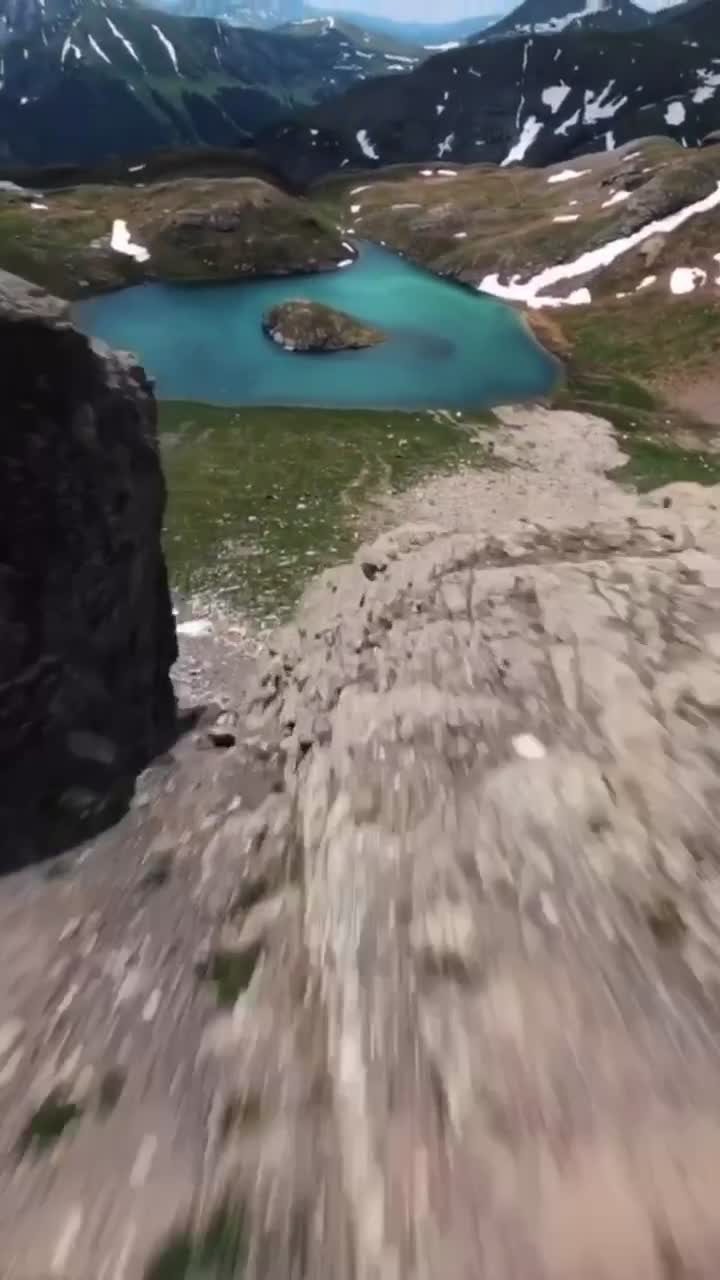
The wind was howling. My fingers were freezing. I stood on the edge of a massive, jagged peak looking down at a tiny pool of turquoise water thousands of feet below.
I had one shot. The light was fading. If I hesitated for even a second, the mountain shadow would swallow the entire valley and ruin the contrast of the shot.
Swooping the Ridge
FPV drones are intense. They require absolute focus.
I calibrated my goggles, took a deep breath, and pushed the sticks forward. The drone plunged straight down the rocky face, skimming inches above loose shale and patches of summer snow. The speed was incredible. I kept the camera tilted down, letting the dramatic drop pull the viewer right into the descent.
My buddy was waiting at the bottom. A tiny red dot against the massive landscape. I cleared the final rock shelf, leveled out over the grass, and swept right past him before pushing out over the crystal-clear water.
Dialing in the Mountain Settings
Shooting fast-moving action in high-contrast mountain terrain is a technical puzzle. Here is how I set up my drone to handle the extreme change in brightness from the shadow of the ridge to the open lake:
Camera: Custom lightweight action camera mounted to a 5-inch FPV frame.
Shutter: Locked at 1/120 to maintain a natural motion blur at high speeds.
ND Filter: ND16 to control the bright alpine glare reflecting off the snow patches.
Color Profile: Flat color profile to maximize dynamic range, allowing me to bring out the deep blues in the water during post-production.
The Verdict
Take the risk. Push your boundaries. Getting a unique perspective sometimes means putting your gear on the line, but the resulting footage makes every stressful second worth it.