Why Your Fried Chicken Lacks That Perfect Crunch
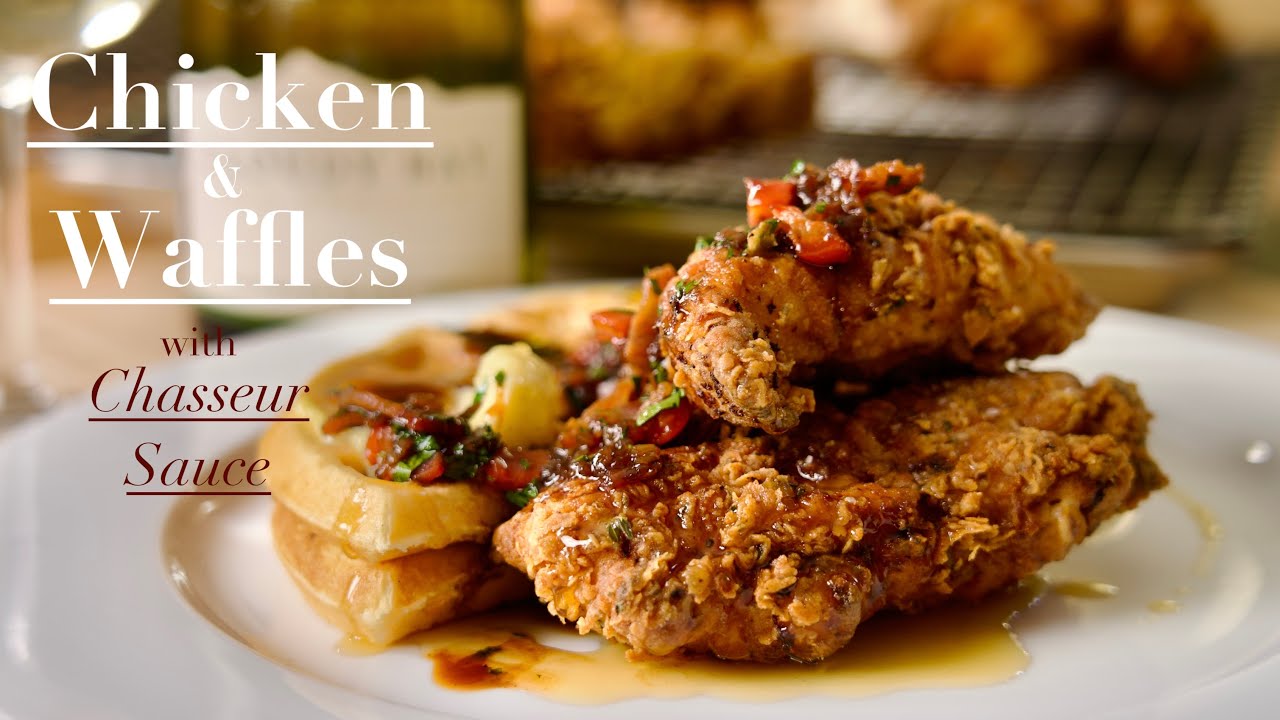
Chicken and waffles is a classic brunch staple for a reason. The sweet and savory combination is hard to beat, but getting the execution right in a home kitchen can be a hurdle. Home cooks often struggle with heavy, soggy crusts or chicken that dries out before the coating can crisp up. I wanted to fix that. I developed a technique-driven approach that elevates this country favorite into something truly restaurant-quality.
The secret lies in rethinking your wet and dry dredge components, controlling your resting times, and introducing a classic French sauce method to bring the whole plate together.
The Buttermilk Alternative and Flaky Dredge
Traditional buttermilk is great, but I prefer a richer alternative. I combine sour cream and whole milk. This mixture offers a thick, tangy base that clings beautifully to the meat. To build a deep flavor profile, I season the liquid generously with onion powder, cayenne pepper for a subtle back-end heat, black pepper, and salt.
The crust? Craggy. The texture? Shatteringly crisp.
[Wet Base: Sour Cream + Milk] ➔ [Seasonings: Cayenne + Onion Powder + Salt + Pepper] ➔ [Rest: 1 Hour]
To accelerate the cooking process and ensure even seasoning, I cut skinless chicken breasts on a bias into smaller pieces. This cuts down on marinating time significantly, allowing the spices to absorb quickly without requiring a 24-hour wait. After a good coating in the wet seasoned base, let the chicken rest for about an hour.
When it comes to the dry flour dredge, I use the exact same spice profile—paprika, cayenne, onion powder, and black pepper. But the real trick for extra crunch is the texture hack. Before the chicken goes into the oil, I sprinkle a few drips of the wet mixture directly over the flour-dredged chicken and pat it in. This creates small, irregular clumps that transform into beautiful, extra-crispy flakes during frying.
Let the fully dredged chicken sit for 30 minutes before frying. This step is crucial. It lets the flour hydrate, ensuring the coating bonds tightly to the meat and won't fall off in the pan.
Elevating Brunch with Chasseur Sauce
Instead of standard maple syrup alone, I pair this dish with a modified French Chasseur, or hunter's sauce. While a traditional Chasseur relies heavily on mushrooms, I omit them here to keep the pairing lighter and cleaner against the heavy fried elements.
The process starts by rendering thick-sliced bacon in a pan until crisp, then reserving that flavorful fat to sweat diced white onions. I deglaze the pan with a splash of New Zealand Sauvignon Blanc, scraping up all the fond from the bottom. Once the wine reduces by three-quarters, I add a high-quality beef stock and a rich demi-glace, reducing it again until it reaches a beautiful, glossy consistency that can coat the back of a spoon.
Right before serving, I finish the sauce with fresh diced tomatoes, the crispy bacon, and finely chopped chives and Italian parsley.
A Harmonized Finish
For the waffles, I combine all-purpose flour with a bit of cake flour to keep the interior crumb incredibly tender. Whisk the dry ingredients with sugar, salt, baking powder, an egg, vanilla paste, sour cream, milk, and warm melted butter. Let the batter rest for 30 minutes so it becomes a solid, homogenized mixture.
Fry the chicken pieces in oil heated to 300°F ($149^\circ\text{C}$) for about seven to eight minutes until golden and flaky, then transfer them to a 350°F ($177^\circ\text{C}$) oven to stay hot and finish cooking through.
To plate, fold your hot, toasty waffles on a dish and nestle the crispy chicken pieces on top. Add a dollop of homemade vanilla bean compound butter, drizzle the warm, savory Chasseur sauce around the plate, and finish with a touch of maple syrup. It is a spectacular, thoughtful balance of sweet, savory, and rich textures that will completely transform your weekend routine. Enjoy the process of building a real French reduction—it makes all the difference.