This Eggs Benedict Upgrade Will Change Your Brunch Game
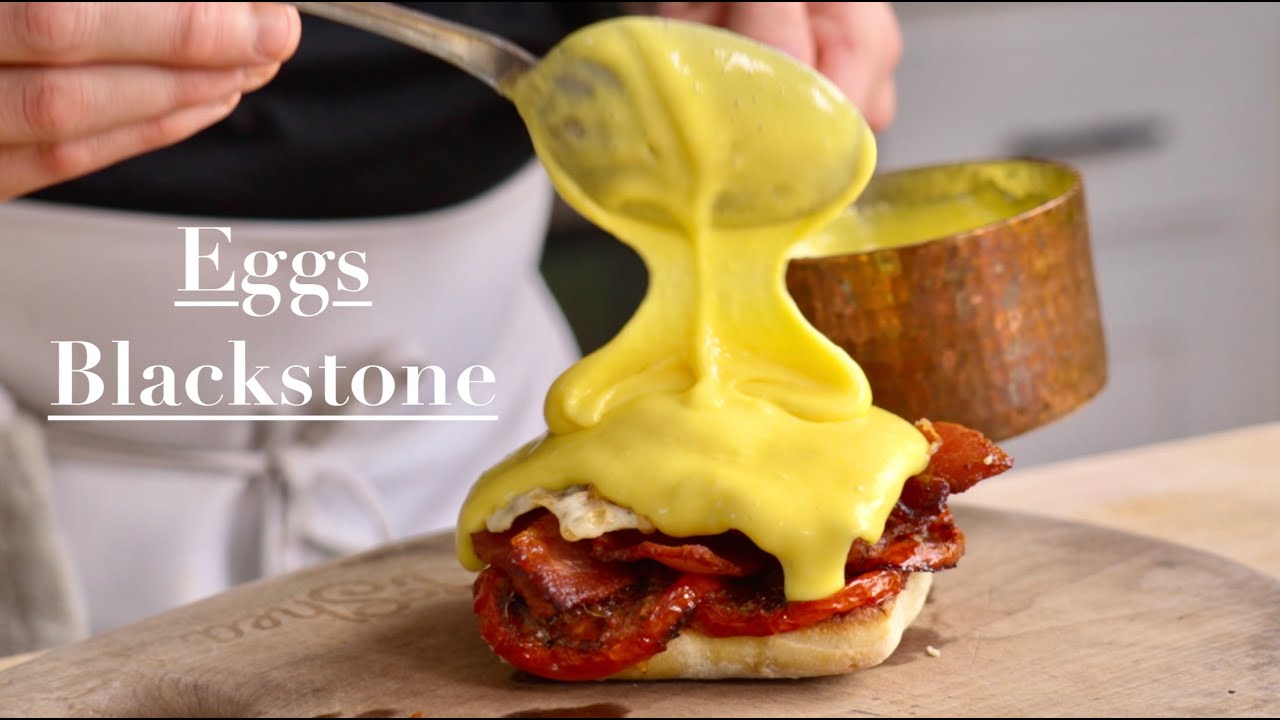
We all love a traditional Eggs Benedict, but sticking to the same routine can make the morning routine feel a bit stagnant. I wanted to try a variation that completely shifts the flavor profile while keeping the setup incredibly approachable. Enter Eggs Blackstone. It takes the core blueprint of a Benedict but swaps out the standard elements for slow-roasted tomatoes and thick, smoky bacon.
The secret to making this dish restaurant-quality comes down to a few fundamental techniques, starting with how you handle your produce and finishing with a foolproof, incredibly stable egg emulsion.
The Secret to Rich, Deep Tomato Umami
Standard raw tomato slices can feel watery and thin on a warm breakfast sandwich. To fix that, we use a high-heat roasting method to pull out the natural sugars and concentrate the flavors. I use thick slices of vine-ripened tomatoes and lay them out flat on a sheet tray.
The texture? Concentrated. The flavor? Incredibly sweet and savory.
[Thick Tomato Slices + Garlic] ➔ [Season: Salt + Pepper + Olive Oil] ➔ [Roast: 400°F for 20 Minutes]
To layer the aromatics, I top each tomato slice with thin pieces of fresh garlic. Hit the tray with a good amount of salt, fresh black pepper, and a generous splash of high-quality olive oil. Slide the tray into an oven set to a low broil, or roughly 400°F (204°C), for about 20 minutes. You want to roast them just until the edges soften, the natural sugars caramelize, and the garlic turns beautifully sweet and tender.
A Fuss-Free, Ultra-Stable Hollandaise
For the sauce, I use pasture-raised egg yolks, which offer a remarkably rich, deep color and a great natural bounce. Many home cooks feel intimidated by emulsified egg sauces, believing they absolutely must clarify their butter ahead of time to keep things from splitting.
In a commercial kitchen, clarified butter adds a bit of structural stability for long service hours. But for a home kitchen preparation, you do not need to worry about clarifying your butter ahead of time if you do not want to make a massive fuss. Whole butter works beautifully and yields a lighter, fluffier texture.
Set up a simple double boiler to gently warm your whisked yolks. You want the yolks just hot enough to melt the butter as it slowly emulsifies into the fat. Continue whisking over the gentle steam until the sauce becomes thick, rich, and airy.
Bringing the temperature of the egg mixture up to about 130°F to 140°F (54°C to 60°C) is the technical sweet spot. It gently cooks the proteins, setting the base into a completely stable egg sauce that won't separate on the plate. Finish the hollandaise with a fresh squeeze of lemon juice, salt, and pepper. While cayenne pepper is traditional, I like to introduce a bright pop of texture and color by using coarse Korean chili flakes instead.
Chef's Tip: Don't let the remaining sauce left in the mixing bowl go to waste. A piece of crusty bread smeared around the warm bowl is an incredible kitchen treat.
Constructing the Perfect Morning Bite
Get a pan going over medium to high heat to render down your thick-cut bacon. I shoot for a balance that is a little bit chewy and a little bit crispy, then transfer it to paper towels to blot off any excess grease. Drop a good knob of whole butter directly into that smoky bacon fat and fry off your remaining eggs, keeping the yolks soft and runny.
To assemble, start with a base of toasted, crusty ciabatta bread. Lay down a few of the garlic-roasted tomatoes, followed by pieces of the crispy bacon and your beautiful fried egg.
Spoon a generous amount of the warm, rich hollandaise right over the top, and garnish with fresh chives, black pepper, and an extra pinch of Korean chili flakes. The concentrated acidity of the roasted tomatoes cuts through the decadent fat of the yolk and butter perfectly. It is an effortless upgrade that elevates brunch into a true restaurant experience.