This Clever Crust Alternative Will Instantly Upgrade Your Brunch Routine
This Clever Crust Alternative Will Instantly Upgrade Your Brunch Routine
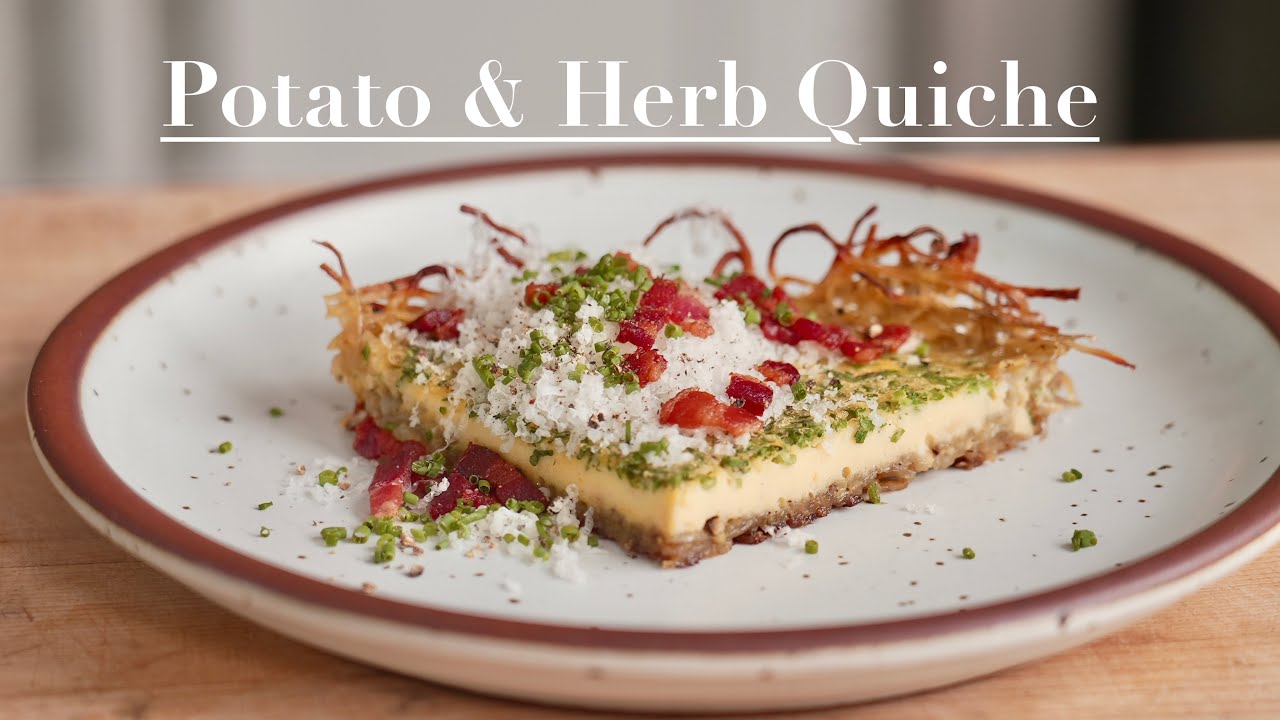
Quiche is an undeniable classic on any brunch menu, but traditional pastry crusts can be a culinary hurdle for home cooks. Rolling out dough requires patience, and all too often, the bottom turns out soggy rather than crisp and flaky. I wanted to rethink the entire format. By replacing the standard flour pastry with a structurally sound, beautifully golden potato base, you completely eliminate the fuss while adding a spectacular layer of texture.
The secret to this elegant dish lies in how you prep your root vegetables and how you treat your egg custard to keep it perfectly delicate.
Engineering the Perfect Potato Shell
A standard grater creates short, watery shreds of potato that tend to mush together in a pan. To get the structural integrity needed to hold a rich custard, I use a Japanese vegetable turner. This tool allows me to achieve incredibly thin, continuous strands of potato. As they cook, these long strands interlace with one another, locking together to form a solid, woven bottom crust.
The crust? Deeply golden. The edge? Shatteringly crisp.
[Continuous Potato Strands] ➔ [Sear in Cast Iron + Butter + Season] ➔ [Shape a Well] ➔ [Bake Until Golden]
To build the shell, melt a good amount of butter in a heavy cast iron pan over medium heat and drop in the potato strands, seasoning them well with salt and pepper. Using your spoon, make a gentle indentation directly in the middle of the pan. Gently work the loose sides up against the edge of the cast iron to create a deep well.
Once you see the bottom and edges turn a beautiful golden brown on the stovetop, remove the pan from the heat and bake it in the oven to fully set the structure. Pull the crisp shell out and allow it to cool slightly on your counter.
While the shell bakes, take a moment to render down your thick-sliced bacon pieces. Cook them down slowly until the excess fat renders away, leaving you with pieces that are slightly chewy with perfectly crispy edges. Drain them on a paper towel and set them aside.
A Delicate Herbed Custard Base
For the rich quiche filling, I am using pasture-raised heirloom blue eggs from Utopian Farms. Because these chickens live in mobile coops and naturally forage on open land, the yolks are remarkably rich and vibrant.
Crack the eggs into a large mixing bowl and pour in your heavy cream. Season the liquid with salt and cracked black pepper, then fold in a generous handful of finely sliced fresh chives and Italian parsley. Whisk the mixture thoroughly until it is fully combined and completely smooth.
Gently pour the herbed egg mixture straight into your par-baked potato shell. Bake the quiche at 375°F (191°C) for about 15 to 20 minutes. Keep a close eye on the oven—you want to bake it just until the center is set but still retains a slight, delicate jiggle.
The All-American Flavor Profile
When the quiche is ready, remove it from the oven and let it cool on the countertop for 5 to 10 minutes so the custard can firm up cleanly before slicing.
To serve, slice the quiche into generous wedges and top them with a snowfall of finely grated Gruyère or Manchego cheese. Finish the plate by scattering your crispy, chewy bacon pieces and a few extra chives right over the melted cheese.
What you get is essentially a comforting, all-American breakfast embedded within an incredibly elegant and beautifully put-together presentation. The best part about this format is its versatility. The fillings can be easily swapped and customized to whatever ingredients you happen to have in your refrigerator, which is always an excellent bonus for a lazy Sunday morning. It is a wonderful, creative spin on a classic technique that will instantly elevate your weekend routine.